
Series: 3 Uncommon Winter Moves That Actually Lower Electric Bills
Throughout this 3-part blog series, we’re dropping 9 uncommon cold-weather moves that could actually lower your customers’ water, gas, and electric bills. The first two parts focused on lowering your water bill and reducing gas usage, and now we’ve come to electricity.
Standard winter guidance only goes so far. After the thermostat is set and the drafts are sealed, efficiency gains depend on daily system use.
It’s been a particularly brutal winter for many of our customers, so these approaches are especially timely. They avoid major home changes and instead emphasize smarter operation, better timing, and informed behavior.
With that in mind, let’s wrap up this series with electric-related solutions!
Electric: Attack the “background load”
Unless you’re heating with electricity instead of gas, you may not think your electric bill increases all that much during the colder months. But winter electric bills can climb quietly—not from big devices but from dozens of small ones running longer.
7. Kill the winter vampire devices
Some electronics draw more power in cold conditions, especially:
- Garage refrigerators
- Network equipment near exterior walls
- Older battery chargers
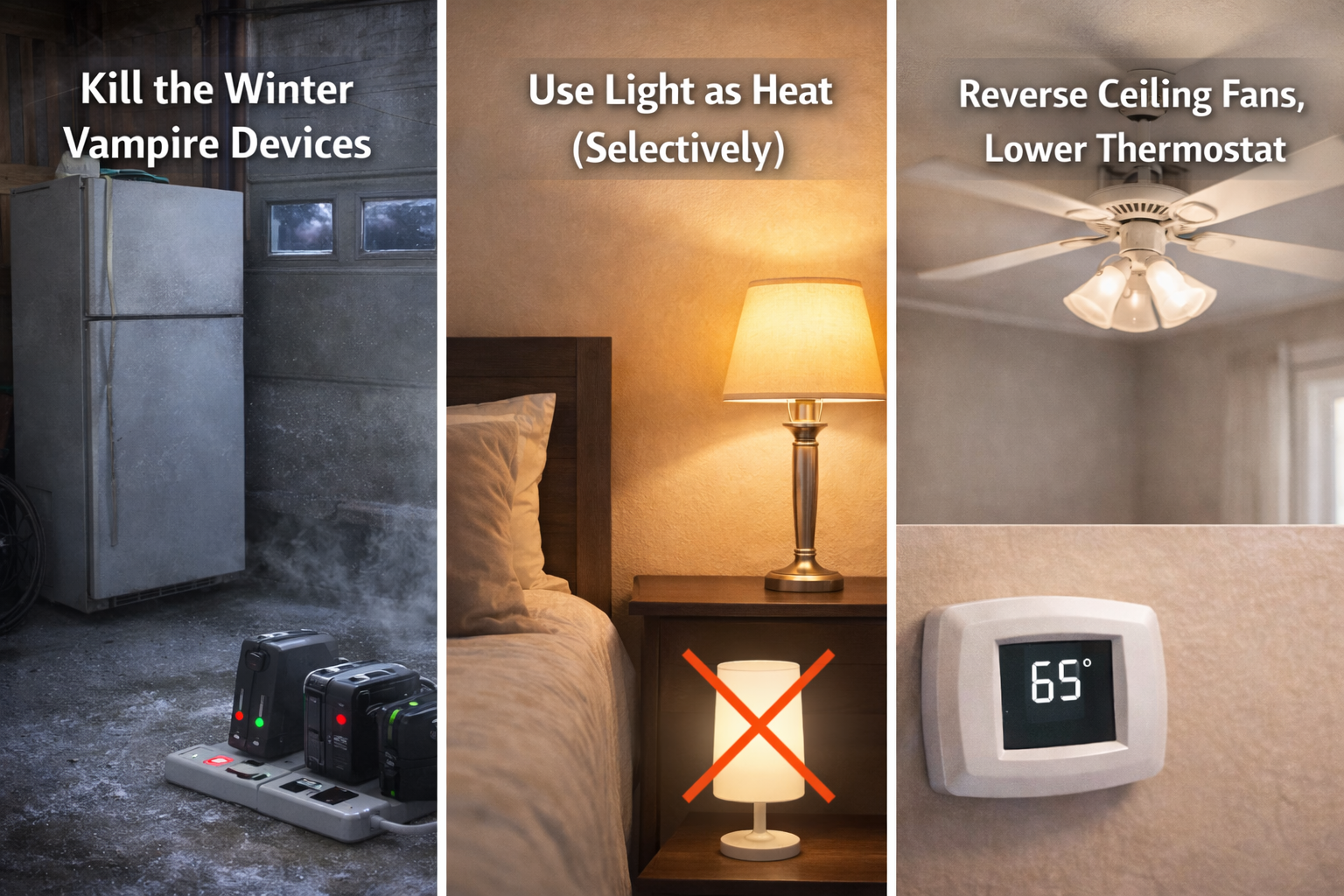
So, what’s the uncommon advice? Relocate or unplug these devices seasonally.
So, yes, it might mean turning off that garage fridge for the season or moving your network equipment more toward the interior of your home. Either way, this isn’t about convenience; it’s about load creep.
8. Use light as heat (selectively)
File this under “mind-blowing.” And this one is straight out of the 1900s (when I was born!).
Did you know that incandescent and halogen lights convert most energy into heat?
LEDs? Not so much.
If you still have incandescent or halogen bulbs, you should use them in rooms already being heated. But avoid using them in unoccupied spaces.
You’re offsetting heating demand with energy already in use. Just don’t add extra lights to do it!
9. Reverse ceiling fans… then lower the thermostat
Many people reverse fans during the cooler months, which is a great first step. But once those fans begin redistributing the heat, lower the thermostat by a few degrees (similar to the advice in our previous post).
Let the fan do the work. The airflow reduces stratification and cuts heating cycles.
If you’ve followed along with this series, and we certainly hope you have, you may’ve noticed an overall theme.
Winter savings don’t come from suffering through the cold or obsessing over one setting (or how long you leave the fridge door open). They come from:
- Shorter waits
- Fewer system starts
- Less invisible waste
- Smarter use of energy already paid for
The cold season rewards precision, not sacrifice.
So, as a utility, if you can help your customers better understand how systems behave in winter (not just how to “use less,” which is still very important), then you can further build trust.
Because after all, “use less” is such common advice at this point that it’s almost become like wallpaper. We don’t want our message to be wallpaper.
We hope you’ve enjoyed this blog series. We’d love to hear any feedback you have on this or any future blog posts, so feel free to shoot us a message at marketing@united-systems.com and let us know how we did!
Also, sign up for our Connected newsletter for more of our content!
More Efficient. More Effective. Greater ROI.
When you have the right tools for the job, everybody wins — especially your customers. Reduce or eliminate pain points, dramatically increase operating efficiency, and provide greater service. Fill out our contact form or call 800.455.3293 to learn more about how United Systems can help!