
Summary
Gas AMI is often justified through billing improvements, but its larger long-term value comes from operational awareness. Accurate reads, fewer estimates, and reduced truck rolls remain important, but modern gas AMI also helps utilities gain better system visibility, respond faster, document field activity more effectively, and support safety-focused operations. Cellular gas AMI offers a practical way to start with high-pain areas and expand as value is proven.
Gas AMI Still Starts with Billing. It Shouldn’t Stop There.
Gas AMI is too often treated like a back-office efficiency project.
That is outdated thinking.
Yes, eliminating most manual reads is an operational improvement. Accurate billing definitely matters. Fewer truck rolls reduce costs and free up crews for higher-value work.
No one is arguing for more manual work, unless they also enjoy fax machines and unnecessary meetings.
But the added value of gas AMI is operational awareness.
Gas utilities are under more pressure (pun intended) to know what is happening in the field, respond faster, document better, and support safety with better data. That makes AMI part of your utility’s safety and operations strategy, not just its billing strategy.
This is especially true as leak detection, repair expectations, and customer responsiveness continue to move higher on the industry agenda.
To be clear, AMI will not replace leak surveys or field expertise. But modern gas AMI can give utilities better visibility from the edge of the system:
- alarms
- on-demand reads
- usage patterns
- remote capabilities
- faster insight when something looks abnormal
That visibility is key. Because in gas operations, knowing sooner usually means responding smarter.
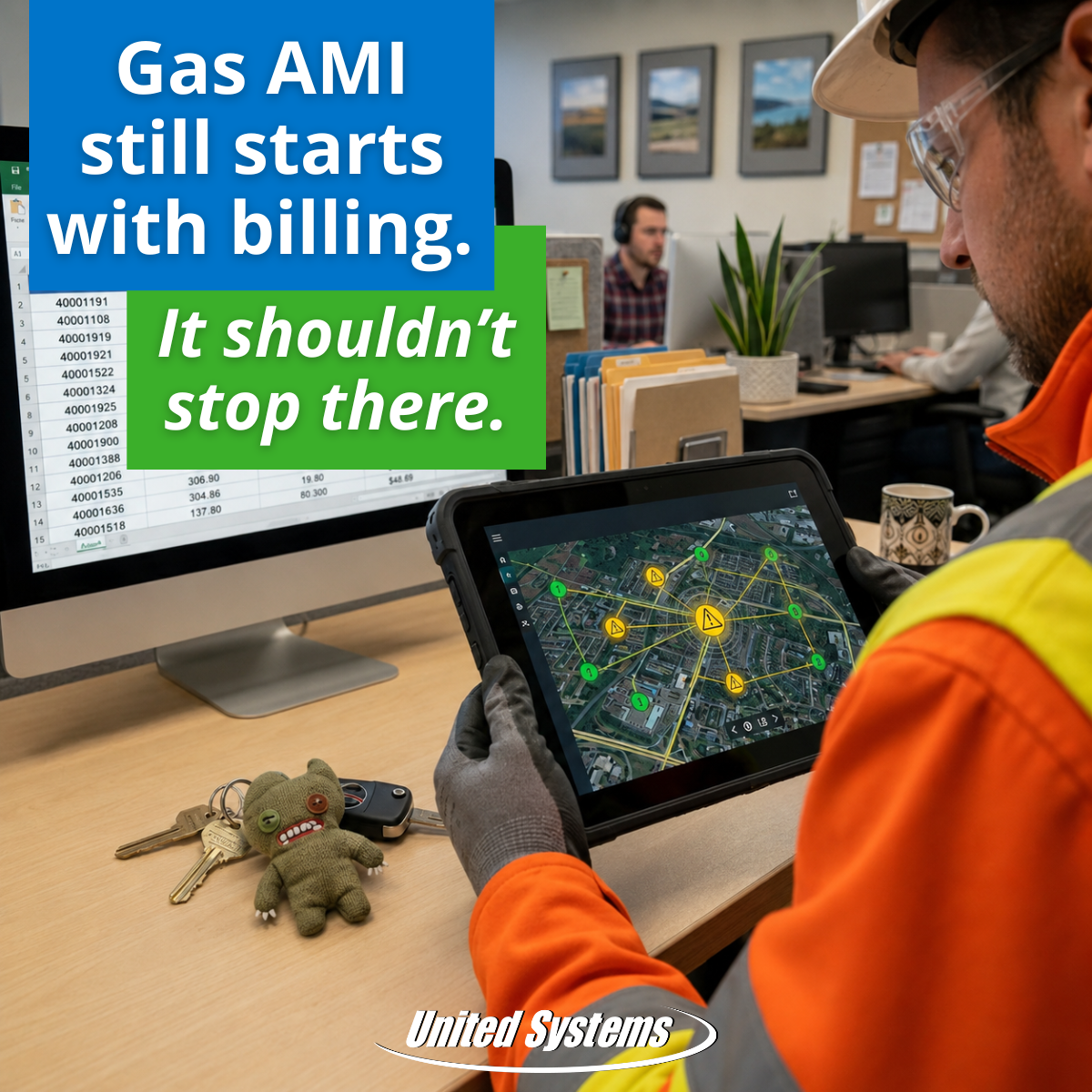
And this is where cellular AMI becomes especially practical.
Not every utility needs to start with a massive fixed-network deployment. Some need a smarter way to modernize hard-to-read routes, high-value accounts, rural meters, or places where truck rolls are eating time and budget.
Start where the pain is highest. Prove the value. Expand from there.
That is why we stand behind solutions like Itron’s AMI Essentials Cellular Gas. They meet utilities where many of them actually are: stretched teams, aging infrastructure, rising expectations, and limited appetite for another large technology project that arrives with a steering committee and ridiculously long timeline.
The bottom line is simple: If you still think gas AMI is only about meter-to-cash, you’re leaving value on the table.
The billing case is still strong: accurate reads, fewer estimates, reduced truck rolls, better revenue assurance, and cleaner customer conversations. That remains the foundation.
But it is no longer the whole value story.
The added value is operational awareness: better visibility, faster insight, stronger documentation, and more control across the system.
That is where modern gas AMI gets more interesting.
While billing may be the business case that gets the gas AMI project approved, operational awareness is the value that keeps paying off.
Ready to reduce friction across operations?
Coordinate billing, payments, customer service, metering, work orders, and operational workflows through utility-focused technology and support services. Talk with our team to learn how United Systems supports utilities through technology, operational services, metering, customer service, and workflow management.