
Summary
Finding and keeping qualified employees is one of the biggest challenges facing water utilities. The factors behind the struggle and the real steps systems can take to make planning for the workforce of tomorrow—a priority today.
Rising Crisis: Finding, Preparing, and Keeping the Next Generation of Water Workers
Finding and keeping qualified employees is one of the biggest challenges facing water utilities today.
And for small, rural systems, where a handful of employees may be responsible for keeping an entire operation running, losing even one person can put the entire operation under strain.
“The aging-workforce issue is very real,” says Heather Stevenson, Director of Workforce Development for the Kentucky Rural Water Association (KRWA).
The Brookings Institute reports that just 4.5% of the nation’s water workforce is under 25 years old. Meanwhile, figures from the U.S. Bureau of Labor Statistics suggest that a third of the industry will be eligible to retire over the next decade.
That’s an estimated 10,000 openings every year through 2034.
“It is already affecting utilities across Kentucky, especially small and rural systems,” Heather explains. “They are seeing retirements, vacancies, and recruitment challenges show up in daily operations.”
Multiple utility leaders attending the 2026 KRWA Management Conference in October backed that up.
“That’s been our biggest challenge,” says Tamara Hunter of North Hopkins Water District, referring to recruiting qualified operators.
“It’s hard to compete with some of the industries for quality applicants,” says David Tapp with the City of Morganfield. He says pay is a tough hurdle to clear.
“Getting someone, a 20-year-old, to give us a chance with the city is a lot harder than it used to be.”
You can’t rush experience
When a veteran operator retires or leaves a utility, you can’t just replace them with the right credentials.
Experienced operators carry years of knowledge about the systems they maintain, including details that rarely make it into a manual.
“A textbook can teach the science and regulations. A certification course can help someone prepare for an exam. But experienced operators know how their specific system behaves,” says Heather.
Without time to learn alongside veteran operators, newer employees may struggle to make decisions and respond to problems.
That puts more than institutional knowledge at risk, which can affect maintenance, regulatory compliance, troubleshooting, and emergency response.
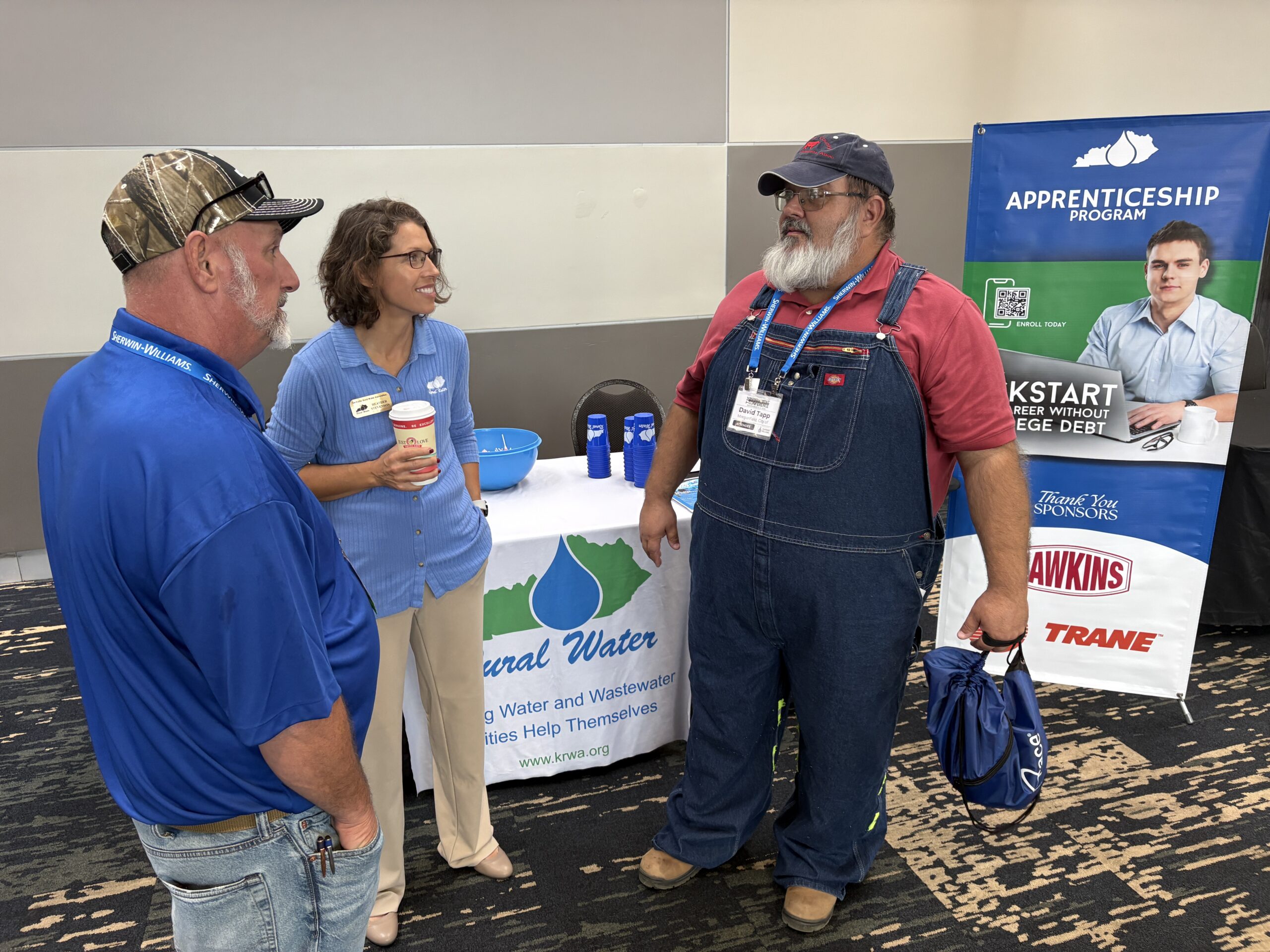
CAPTION: Heather Stevenson (center, KRWA) talks with David Tapp (right, city of Morganfield) and Rob
Hensley (left, city of Clay) at the 2026 KRWA Management Conference in October.
The cost of waiting
Despite the urgency, it’s tough for most small utilities to prioritize workforce planning.
Heather says if that’s you, your staff is likely already managing a long list of daily responsibilities and immediate needs. That includes responding to emergencies, covering overtime, and keeping up with routine operations.
When today’s emergencies take priority, planning for tomorrow’s retirements is easy to postpone.
“If those systems are waiting until someone leaves, then they’re already behind,” Heather says.
Most operators need a required amount of on-the-job training before they’re eligible to sit for a licensing exam. That amount varies, depending on whether the system is Class I or Class II, but is at least a year.
Kentucky, like many states, does offer an Operator-In-Training (OIT) pathway that allows trainees to take the basic certification exam without experience.
Still, years of substantial training and experience ensures that new hires are fully qualified to step into the responsibilities of the position.
“In this industry, they [utilities] think they can’t afford to hire, but honestly, they can’t afford not to,” stresses Heather.
Hiring is only half the battle
This may be a familiar and frustrating scenario for you: your smaller, rural utility invests a considerable amount of time and resources into training someone, only to lose them to another system or industry.
Competition can come from larger utilities, construction, manufacturing, and other employers offering higher wages or more flexible schedules.
While pay does matter, retention also depends on employee perception.
“One of the biggest reasons someone may leave after a utility has invested in training them is that they do not see a future there,” Heather says.
Utilities can create that future by offering paths to certification, wage increases tied to qualifications, mentoring, and opportunities for more responsibility.
A clear career path can also help change how potential employees view the water industry.
“Water and wastewater operators protect public health every day. They make decisions about treatment, compliance, sampling, reporting, maintenance, safety, and emergency response,” says Heather. “The work is technical, hands-on, and increasingly complex as regulations, technology, and infrastructure needs continue to evolve.”
“Making those opportunities more visible is an important part of attracting people who may never have considered working for a utility.”
Start planning before someone leaves
Addressing the workforce challenge doesn’t necessarily require a complicated succession plan or an immediate overhaul of staffing practices.
It does require utilities being intentional about the people who keep their systems running.
Heather recommends starting with a straightforward assessment of where your utility is most vulnerable:
- Who holds the most critical knowledge?
- Which employees may be eligible to retire in the next few years?
- What responsibilities would be difficult to cover if someone left unexpectedly?
From there, utilities can start transferring knowledge by pairing newer employees with experienced operators, documenting important procedures, and cross-training staff whenever possible.
The goal is to ensure that more than one person understands the system’s equipment, routines, problem areas, and emergency procedures.
Utilities can also begin building a pathway for the next employee. That might include identifying a mentor, creating a wage progression tied to certification, or working with schools and local workforce organizations to introduce more people to water careers.
“For small utilities, succession planning does not have to be complicated, but it does have to be intentional,” says Heather.
Heather also urges utilities to consider enrolling new or existing employees in a state-level apprenticeship program affiliated with the National Rural Water Association. 35 states currently take part, including Kentucky.
In my next blog focusing on water workforce development, I’m taking a closer look at how that program works, including what its first graduate from six years ago is up to now. That’s publishing next week! ♦
VIDEO CAPTION (below): While attending the 2026 KRWA Management Conference in October I interviewed
multiple utilities and Heather Stevenson with KRWA about the state of hiring in the water industry.
Ready to reduce friction across operations?
Coordinate billing, payments, customer service, metering, work orders, and operational workflows through utility-focused technology and support services. Talk with our team to learn how United Systems supports utilities through technology, operational services, metering, customer service, and workflow management.