
Summary
Severe weather can disrupt traditional AMR and fixed-network metering infrastructure, limiting utilities’ ability to communicate with meters and understand system conditions. Cellular AMI improves resilience by providing more direct communications, multi-network connectivity, priority communications, and hybrid cellular/RF redundancy. Combined with real-time AMI visibility and emergency response tools, these capabilities can help utilities identify outages or leaks, coordinate resources, and restore service more effectively after major weather events.
How Cellular AMI improves utility resilience during severe weather
There’s no doubt that “one hundred” or “one thousand year” weather events are happening much more frequently, with this weekend’s catastrophic flooding in Central Indiana being the most recent example.
And there’s also no doubt that extreme weather like that can expose weaknesses in a utility’s metering and communications infrastructure.
For utilities still relying on AMR or older fixed-network systems, that can be especially challenging. Collectors, repeaters, gateways, and other field infrastructure may be vulnerable to lightning, high winds, flooding, power loss, or physical damage.
And when a critical component goes down, communications to a larger group of meters can be affected as well.
Even traditional AMI networks can face similar challenges when communications depend on local aggregation points or utility-owned backhaul.
Cellular AMI changes that model.
By connecting meters more directly through commercial cellular networks — with capabilities such as multi-network connectivity, priority communications, and hybrid cellular/RF architectures — utilities can reduce their dependence on some of the local infrastructure that severe weather can disrupt.
That doesn’t make cellular AMI stormproof, but it can give utilities more communications options when conditions change, which is ultimately what resilience is about.
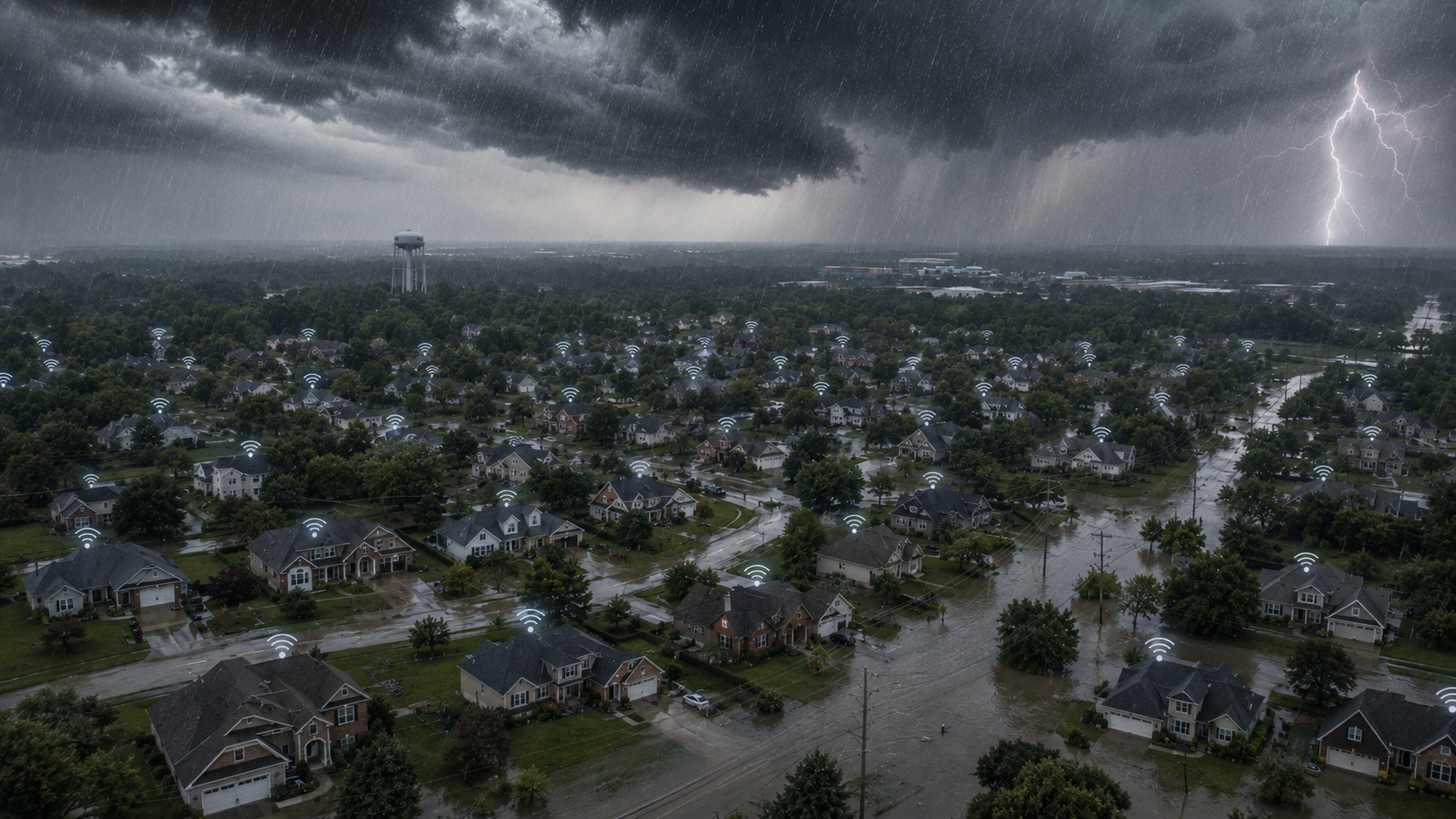
How does cellular AMI improve weather resilience?
No communications technology is immune to severe weather. Cellular sites can lose power, fiber can be cut, and RF infrastructure can go down. What matters is what the network can do next.
In AMR and many fixed-network architectures, meters may rely on collectors, repeaters, gateways, or other local infrastructure to move data upstream. If one of those critical aggregation points is damaged or loses power, communications to the endpoints behind it may be interrupted.
Direct-to-cellular AMI creates a different model by allowing endpoints to communicate directly through commercial cellular networks.
Newer cellular capabilities can add another layer of resilience.
For example, Itron’s multi-profile eSIM technology can automatically switch cellular networks to optimize connectivity. This provides built-in communications resiliency across a utility’s service territory.
Itron also supports prioritized connectivity through FirstNet, adding another layer of communications resilience for critical infrastructure during emergency conditions.
True redundancy gives communications somewhere else to go when conditions change.
Cellular and RF don’t have to be an either/or choice
In fact, a hybrid approach can add another layer of redundancy.
Itron’s SocketAP 5 combines cellular and RF mesh communications. Itron says its mesh routing provides multiple communications paths to each endpoint device, increasing reliability and redundancy.
What utilities really need is a network designed with options.
If one path is disrupted, what’s your alternative?
That’s a question more utilities are having to plan around as extreme weather becomes harder to treat as an exception.
Resiliency depends on visibility, too
Keeping communications available is certainly valuable, but so, too, is maintaining visibility while conditions across your service territory are changing quickly.
AMI data can help utilities understand which endpoints are communicating, where service interruptions may be occurring, and when service has been restored. For water utilities, it can also help identify abnormal usage that may indicate leaks or damage.
That visibility becomes particularly valuable after a major weather event.
Following Hurricane Irma in 2017, Provo Water Company in the Turks & Caicos Islands lost nearly 3 million gallons of water. The utility used its Itron AMI solution to detect leaks, restore service, and re-pressurize the network. In less than four days, the full water system had been re-pressurized, and customers were back online.
Less than four days to re-pressurize the full system after a Category 5 storm is a pretty remarkable recovery.
That recovery depended on having the visibility to understand where problems existed and the ability to act on them quickly.
How can utilities turn AMI visibility into action?
Of course, knowing what’s happening doesn’t restore service by itself.
Utilities also have to predict impacts, get crews and other resources into position, and then coordinate the restoration work once the storm hits.
That brings us to the operational side of the response.
Itron’s Emergency Preparedness & Response solution (EP&R) combines AI-driven impact modeling with resource sourcing and management to help utilities predict storm damage, pre-stage crews, and coordinate response activities.
Itron reports a 10% reduction in power restoration time, more than 6 million person-hours managed across 215+ storm events, and the ability to request, evaluate, and secure hundreds of line crews in under 90 minutes.
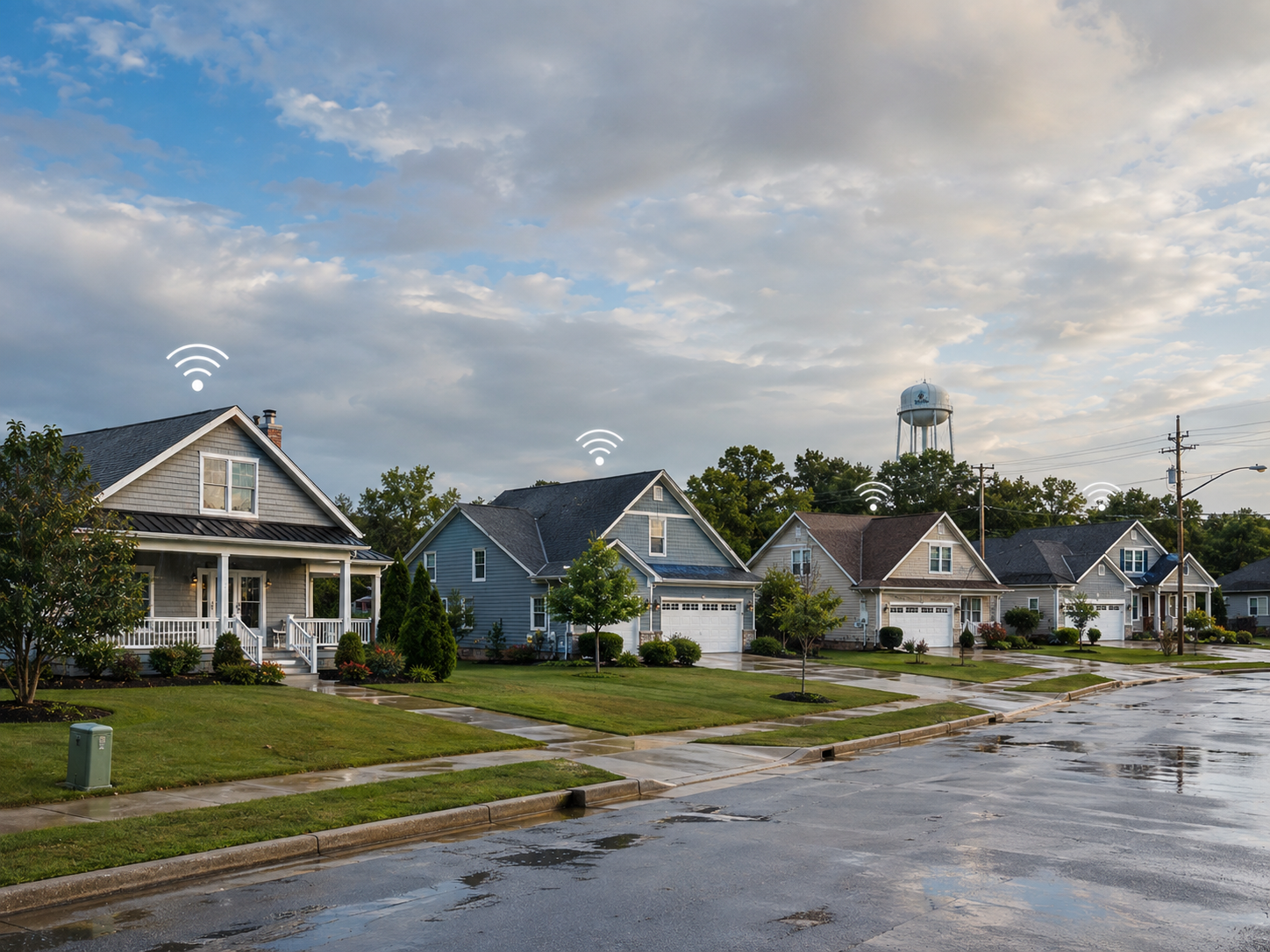
AMI helps preserve visibility, while Itron EP&R helps utilities act on what they’re seeing. Together, they support the broader resilience cycle before, during, and after a disaster: Prepare. Withstand. Respond. Recover.
What should utilities consider when evaluating AMI for weather resilience?
There’s no single communications architecture that eliminates every weather-related risk.
Instead, utilities can look at the number of options their network provides when conditions stop being normal.
- Can endpoints use more than one cellular network?
- Are priority communications available during emergencies?
- Can cellular and RF communications work together?
- How much field infrastructure has to remain operational for meters to communicate?
- Can information from the network be translated quickly into operational action?
When the next storm arrives, the utilities best positioned to respond will be the ones with options: in how they communicate, what they can see, and how quickly they can act on it.
Ready to reduce friction across operations?
Coordinate billing, payments, customer service, metering, work orders, and operational workflows through utility-focused technology and support services. Talk with our team to learn how United Systems supports utilities through technology, operational services, metering, customer service, and workflow management.