
Summary
It's official: El Niño is underway. The climate phenomenon is expected to build into 2027 and possibly become the strongest El Niño in more than a century. Weather patterns across the globe will be impacted. We're looking at the effects utilities across the United States might experience.
How will El Niño impact utilities?
Utilities: are you ready for El Niño? The climate phenomenon is expected to bring disruptive, even dangerous, weather conditions into next year.
El Niño was officially declared underway in June. The most noticeable effects for North America are expected into late fall and early 2027.
But weather experts have been watching this building El Niño for months. It may develop into the strongest in more than a century.
That means utilities need to be aware of potential disruptive weather to come.
What is El Niño, and how is this event different?
El Niño usually occurs every three to five years, when the Pacific Ocean warms.
Jennifer Rukavina is a veteran meteorologist and the founder of the Paducah Weather Company. She’s spent more than two decades studying climate and tracking the impacts of multiple El Niño events.
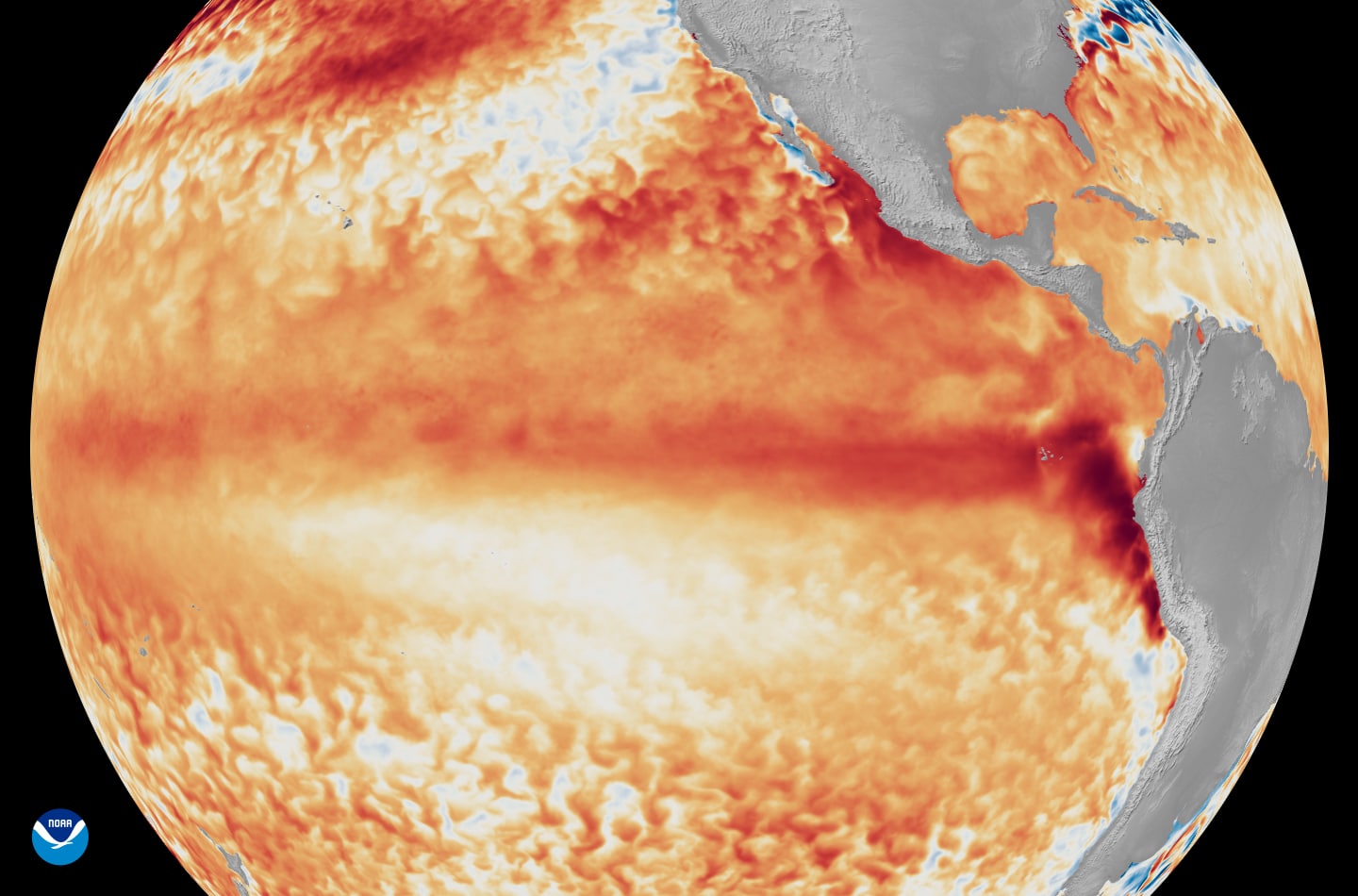
CAPTION (above): National Oceanic and Atmospheric Administration (NOAA) satellite imagery shows the difference from average sea surface temperatures at the equator in the tropical
Pacific Ocean—depicted using various shades of red and orange for warmth—during the first week of June 2026, as compared with the baseline used by NOAA’s Coral Reef Watch.
“They [NOAA] monitor waters all the way to the Central Pacific. And there’s a region out in the Central Pacific that has to meet a certain threshold for so many periods of time,” says Rukavina.
The water temperature in that region of the Pacific Ocean must read at least 0.5°C above average for several consecutive months for NOAA to declare an El Niño. That warmth is released into the atmosphere, affecting global wind patterns and weather systems.
CAPTION (right): This NOAA graphic shows how El Niño and La Nina impact global
weather patterns.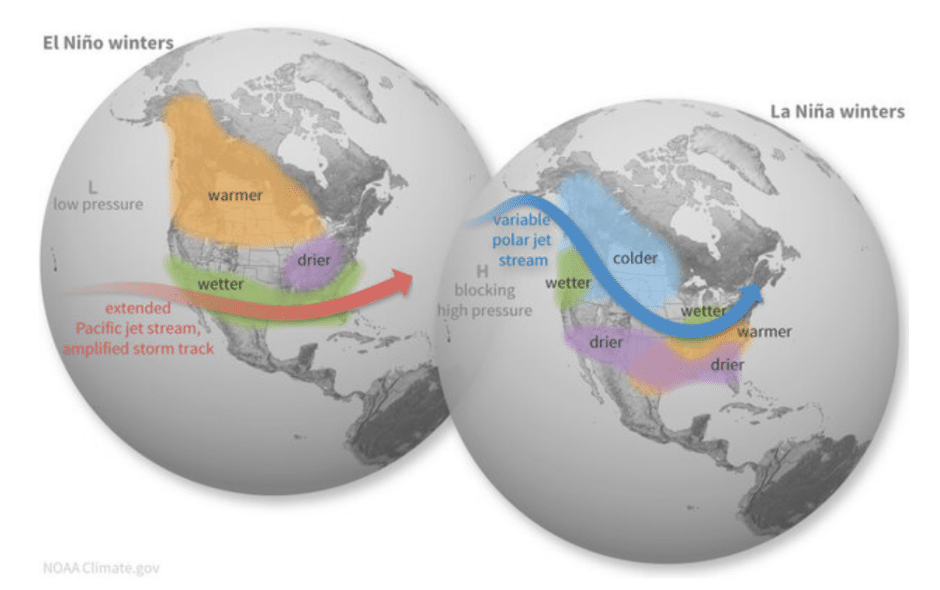

“We [North America] notice a displacement of the subtropical jet stream and the northern jet stream that impacts us mainly in the winter,” explains Rukavina.
While a similar jet stream setup is expected for this El Niño event, it’s not expected to be typical.
“The current episode is forecast to become very strong. Which is rare. Very rare.”
“Stronger episodes tend to bring in a lot more moisture to the deep south [southeast and southwest United States],” Rukavina says. “So, you’re talking about wetter than average. Much wetter than average.”
CAPTION (right): Rukavina interviewing Kentucky Governor Andy Beshear on Dec 10,
2024, the anniversary of the 2021 EF4 tornado, for her Century of Storms documentary.
More heat is expected, too, and unusual humidity, especially in western states. The Central and Southern U.S. will likely deal with higher-than-average temperatures and more frequent heat waves.
How can El Nino impact utilities?
Water, electric, and gas utilities are all vulnerable to the disruptive weather caused by El Niño: severe storms, heavy downpours, drought, heat waves.
Water utilities face issues like reduced water supply, increased customer demand, poorer source-water quality, storm damage, and flooding.
“Flooding can wash away dirt and damage underground water mains,” says Earn Brown, General Manager with the East Logan Water District in Russellville, KY. “It can also make it harder for our crews to reach tanks, pump stations, and other equipment.”

Like many smaller water systems, significant weather events can take a toll on East Logan. Brown emphasized that her crews work hard to stay ahead of any issues.
“During and after flood events, we increase water quality monitoring by checking chlorine levels, turbidity, and collecting bacteriological samples to help ensure the water remains safe,” Brown says.
For electric utilities, higher cooling demand is likely in regions experiencing heat waves. That puts stress on generation, transmission, and distribution systems. Low rainfall can impact hydropower generation. Wildfires can both threaten, and be caused by, infrastructure.
CAPTION (left): Earn Brown (top center),
General Manager of East Logan Water District
(KY), talks with a staff member (bottom right)
at their Russellville office in 2026.
The impacts on gas utilities are more nuanced. Warmer winter conditions mean lower residential heating demand, which can lead to storage issues. Extreme cold spikes, despite warmer winter conditions overall, could stress supply and pipeline capacity. In the heat of the summer, demand goes up for power plants using natural gas to generate electricity.
And crews with any utility system can have difficulty accessing infrastructure in need of service or repair during flooding, severe weather, and wildfires.
Can utilities prepare?
The short answer is YES.
“This is something [El Niño] that’s going to build as we move forward, and everybody kind of needs to be prepared,” Rukavina stresses.
It may not be possible to plan for every scenario. But there is a practical checklist your utility can follow to help weather the storm. Click the link to read the next blog in this series: “How can utilities prepare for El Niño now?“
Ready to reduce friction across operations?
Coordinate billing, payments, customer service, metering, work orders, and operational workflows through utility-focused technology and support services. Talk with our team to learn how United Systems supports utilities through technology, operational services, metering, customer service, and workflow management.