
Summary
Finding an experienced, certified water operator isn’t easy, especially for rural utilities facing retirements and a limited pool of qualified applicants. The Kentucky Rural Water Association (KRWA) is helping utilities take a different approach: hire people with potential and train them for the job.
Finding Your Next Water Operator: Inside KRWA’s Apprenticeship Program
Finding an experienced, certified water operator isn’t easy. For rural utilities facing retirements and a limited pool of qualified applicants, waiting for the right candidate can leave critical positions unfilled.
As I discussed in last week’s blog, “Rising Crisis: Finding, Preparing, and Keeping the Next Generation of Water Workers,” recruiting and retaining qualified employees has become a growing challenge for water utilities.
The Kentucky Rural Water Association (KRWA) is helping utilities take a different approach: hire people with potential and train them for the job.
“Apprenticeship allows utilities to hire for potential, not just existing credentials,” says Heather Stevenson, KRWA’s Director of Workforce Development.
I spoke with Heather about the organization’s apprenticeship efforts during the KRWA Management Conference in October. The program provides utilities with a structured way to recruit, train, and prepare employees for long-term careers in the water and wastewater industry.
From workforce concern to practical solution
David Peterson started thinking about the water workforce challenge 15 years ago while looking at his employees’ retirement plans.
The CEO of Caveland Environmental Authority (KY) realized that within a decade, his system could lose three key employees.
“That’s when I implemented cross training,” says David, who also serves as Senior Vice President of the National Rural Water Association (NRWA).
Today, employees at Caveland learn multiple areas of the operation.
“This is not a business that can close for a month,” says David. “It has to be operational.”
It’s a realization that helped motivate David’s early involvement with the development of the NRWA’s Apprenticeship Program and advocacy for Kentucky’s adoption of it.
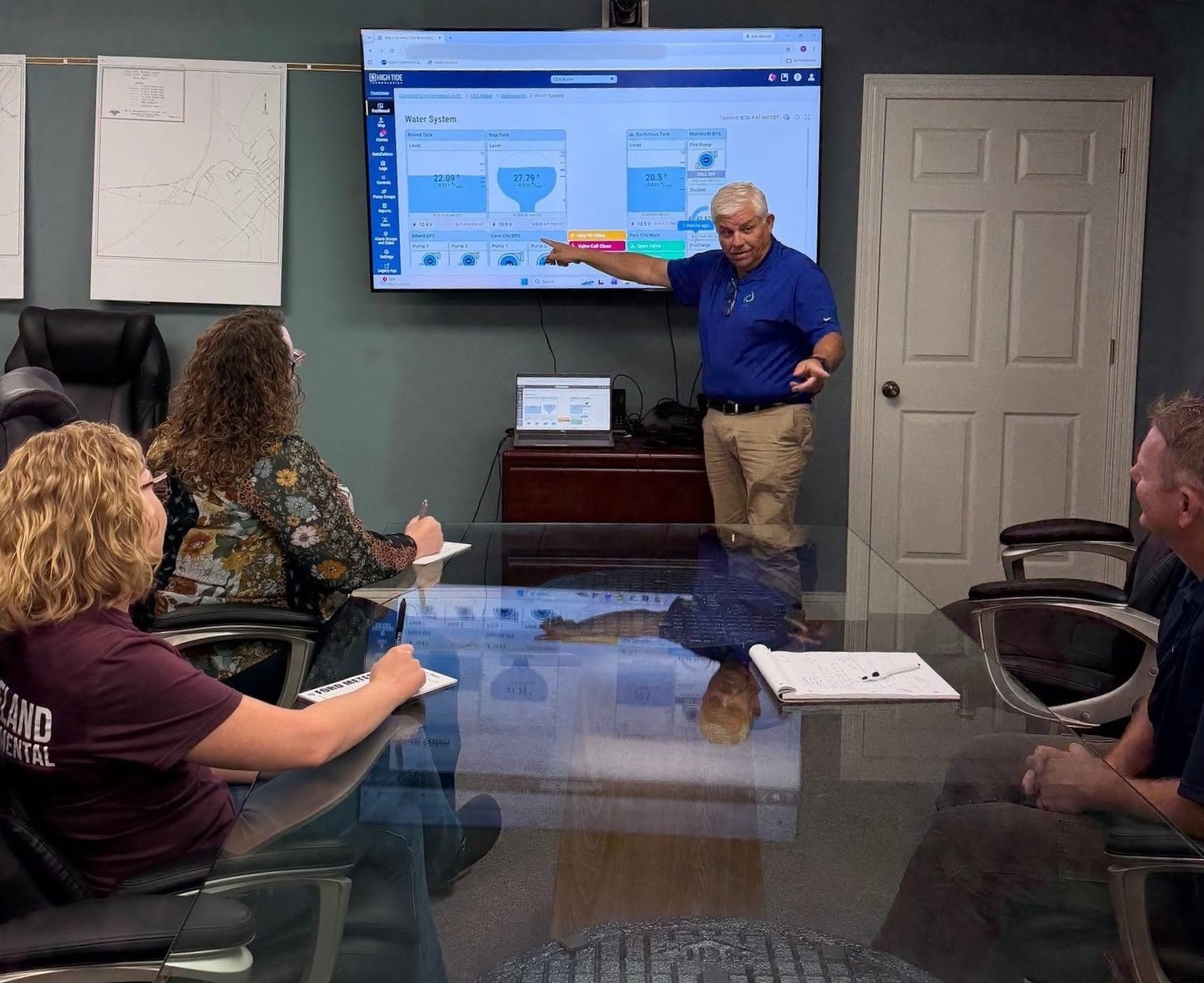
CAPTION: David Peterson (center, standing), Caveland
Environmental Authority (CEA) CEO, reviewing SCADA
operations with members of the CEA team.
What does apprenticeship look like?
At its core, the KRWA Apprenticeship Program combines hands-on experience with structured training and mentorship.
“The apprentice is not just shadowing randomly or learning only when there is time,” Heather says. “They are completing documented on-the-job training, receiving related technical instruction, and working under a mentor who can evaluate their progress and connect classroom knowledge to real-world operations.”
For utilities, the benefit is twofold: utilities can develop an employee’s technical skill and build familiarity with their specific systems.
Hiring for potential, not just experience
In a competitive labor market, waiting for an already-certified operator to apply may leave you with few options.
Heather believes utilities need to look beyond existing credentials and recognize the potential in people who may be new to the industry.
“The qualities that matter most are dependability, work ethic, curiosity, and willingness to learn,” Heather explains.
“Utilities need people who show up, ask questions, take instruction seriously, and understand that this work affects the health and safety of their community.”
Someone with experience in agriculture, construction, manufacturing, mechanics, or the military may already have practical skills that translate well to utility operations.
It also creates opportunities to recruit locally.
Rather than competing exclusively for experienced operators, utilities can identify people with potential in their own communities.
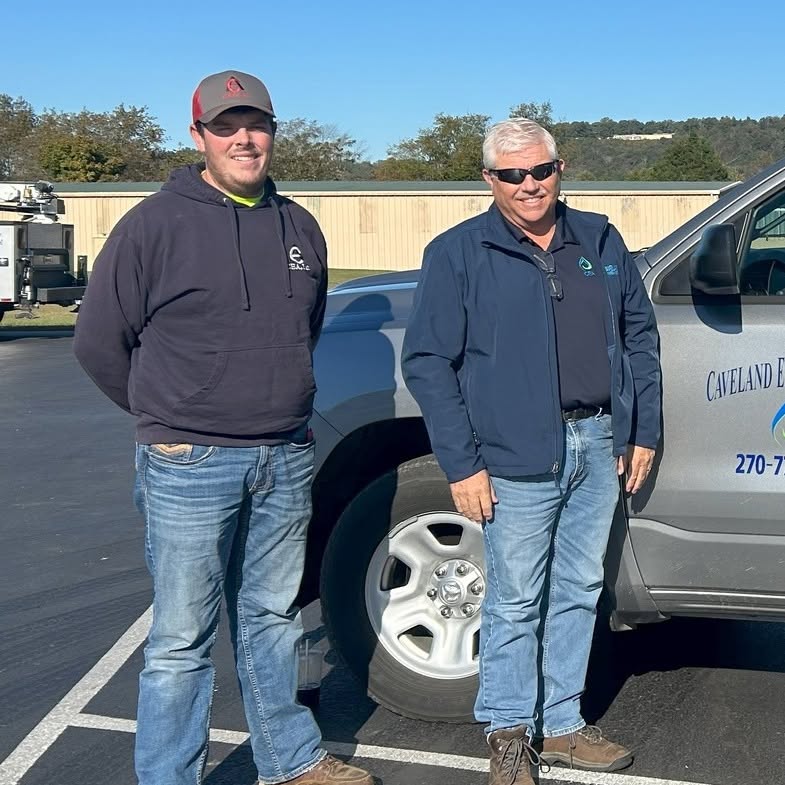
CAPTION: Zack Caudel (left) stands with David Peterson
(right), CEO of Caveland Environmental Authority (KY).
Zack was KRWA's first apprentice. He's now a wastewater
plant operator and primarily oversees Caveland's Horse
Cave wastewater plant.
Learning alongside the first generation of KRWA apprentices
Caveland’s experience illustrates how that approach can work in practice.
Zack Caudel was Kentucky’s first KRWA apprentice.
He wasn’t entirely sure what he wanted to do after high school. David, who knew Zack and his family, explained the opportunities—and realities—of working in water and wastewater.
Zack decided to give it a try.
“I was kind of their guinea pig,” he says, describing his experience as the first apprentice in Kentucky.
The early stages involved some growing pains. Zack and Heather, who was helping develop the program’s implementation in Kentucky at the time, worked through the process together.
“We just kind of tag teamed,” Zack recalls.
His training took him beyond the wastewater plant where he started. Zack got to work at a pretreatment facility, spend time with the construction team installing pump stations, get experience with the utility’s on-call responsibilities, and attend KRWA classes and conferences.
“I was all over the state. I was everywhere.”
Today, Zack works as a wastewater plant operator and primarily oversees Caveland’s Horse Cave wastewater plant.
And the program’s reach at Caveland continues.
Current apprentice Jaden Wilson is pursuing a water-operator pathway. He’s gaining experience in the field, including residential work installing meters and service taps. At the same time, he’s hitting the books.
“I’m taking classes right now to learn kind of more of the booklet side of things,” Jaden says of what he sees as an important complement to on the job learning.
“The apprenticeship, I’d say it really helps with the book knowledge and everything and kind of why you do stuff the way you do it,” he explains. “The foundation.”
Zack says learning has also meant becoming comfortable asking questions and understanding the reasoning behind a particular procedure, not just knowing which steps to follow.
“You need to know why you did that in case it happens again,” he says.
Zack and Jaden’s experiences show just how much employees and utilities can benefit from apprenticeships.
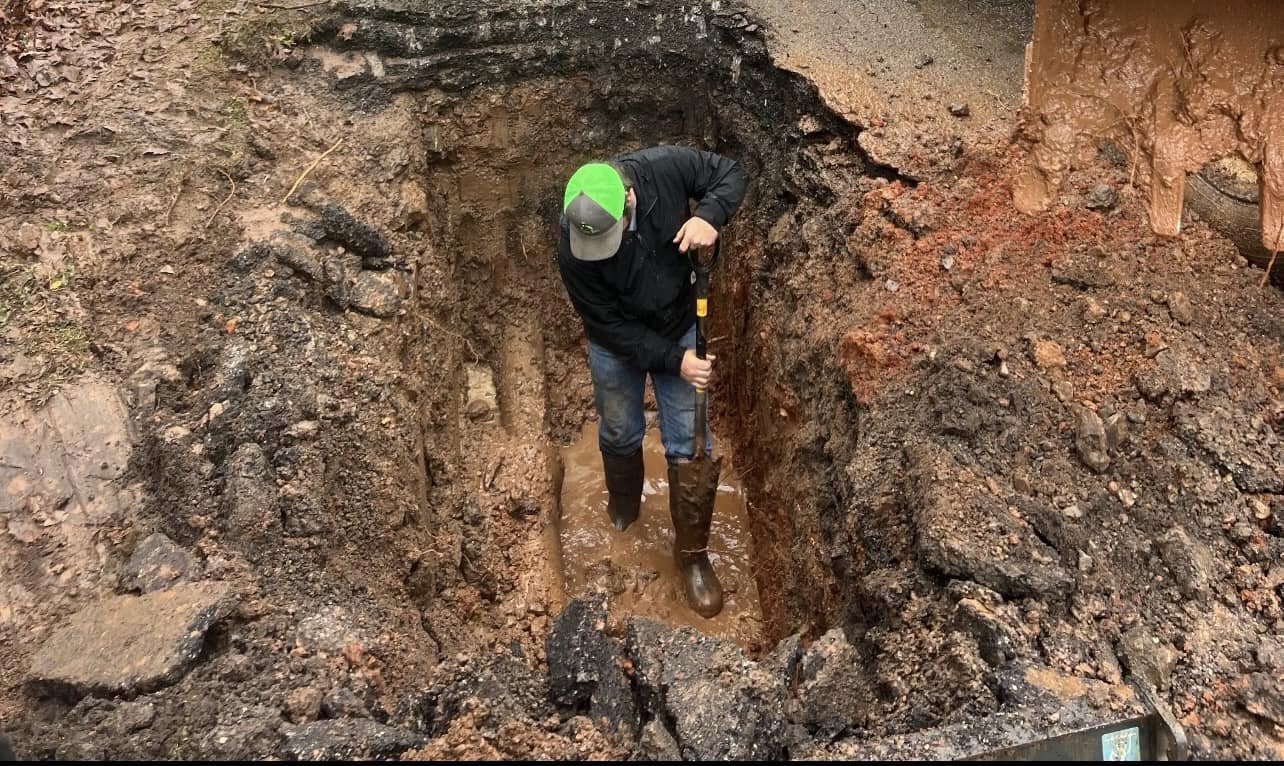
CAPTION: Jaden Wilson (above) started at CEA in 2024
in the maintenance division. He's currently a KRWA
apprentice.
Both are gaining the technical knowledge and practical experience needed to support essential services in their communities.
Find, develop, and keep them!
Part of the recruitment challenge is educating the public.
“The water industry has to stop assuming people already understand the value of this profession, because many people do not fully understand the value of water itself,” says Heather.
Water and wastewater services are essential to public health, economic development, fire protection, schools, hospitals, and everyday life.
But if they’re working reliably, those services are largely invisible. The professionals responsible for maintaining them often are, too.
“If we want younger workers to value water careers, we have to help them understand the resource first,” explains Heather. “Once people understand the true value of water, they can better understand the value of the professionals who protect it.”
Yes, utilities need to attract them, but you also need to give them reasons to stay.
“Retention is not only about pay,” she says. “Employees also leave when they feel unsupported, overworked, undervalued, or unclear about their career path.”
Heather recommends creating career ladders, recognizing certification achievements, offering wage progression as employees gain skills, and providing access to mentoring and professional development.
Building a career close to home
For rural utilities, finding the next generation of water operators may mean looking beyond the traditional pool of applicants.
As Caveland’s experience demonstrates, people don’t necessarily need to arrive with every qualification. They need an opportunity to learn, experienced employees willing to teach, and a utility committed to their development.
And for people who want to build a career without leaving their communities, apprenticeships can provide a path into an essential industry.
Sometimes the next great water operator is already living in your community. They just haven’t considered the possibility yet!
In my next blog in our water workforce development series, I’ll explore some of the unexpected places utilities can find promising candidates. ♦
Ready to reduce friction across operations?
Coordinate billing, payments, customer service, metering, work orders, and operational workflows through utility-focused technology and support services. Talk with our team to learn how United Systems supports utilities through technology, operational services, metering, customer service, and workflow management.